
5 Seller Moves That Make NYC Apartments Feel Bigger
5 Seller Moves That Make Apartments Feel Bigger and More Valuable
When buyers walk into an apartment, they are not only reacting to square footage. They are responding to light, flow, storage, and whether the home feels easy to live in. A well-prepared apartment can feel more open, more functional, and more memorable from the first showing, which is exactly why thoughtful presentation matters before listing.
For sellers, the goal is not to make the home feel staged beyond recognition. It is to remove distractions so buyers can focus on layout, livability, and potential. These five seller moves can help an apartment feel larger, calmer, and more market-ready while supporting a stronger first impression online and in person.
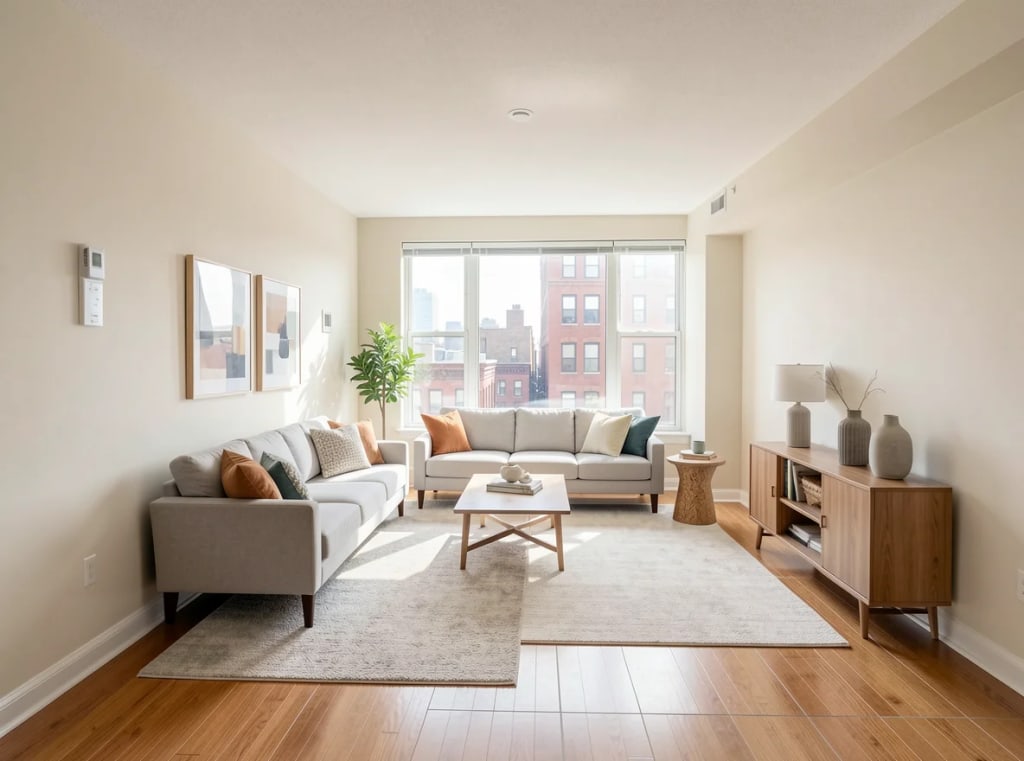
1. Edit the room more aggressively than expected. One of the fastest ways to make an apartment feel bigger is to remove anything that interrupts sightlines. That includes extra chairs, oversized side tables, crowded shelving, stacked storage bins, and decorative pieces that make the room feel busy. Buyers tend to read visual noise as limited space, even when the floor plan is workable.
Start by keeping only the furniture that clearly supports the room's purpose. If a living area is trying to function as a lounge, office, gym, and storage zone all at once, it will almost always feel smaller. A cleaner layout helps buyers understand the room immediately, and that clarity creates a stronger sense of openness.
Closets deserve the same attention. Buyers open every door, and overfilled storage sends the message that the apartment is already at capacity. Removing a meaningful portion of clothing, pantry items, and household overflow helps every storage area read as useful rather than strained.
Let Layout Do More of the Work
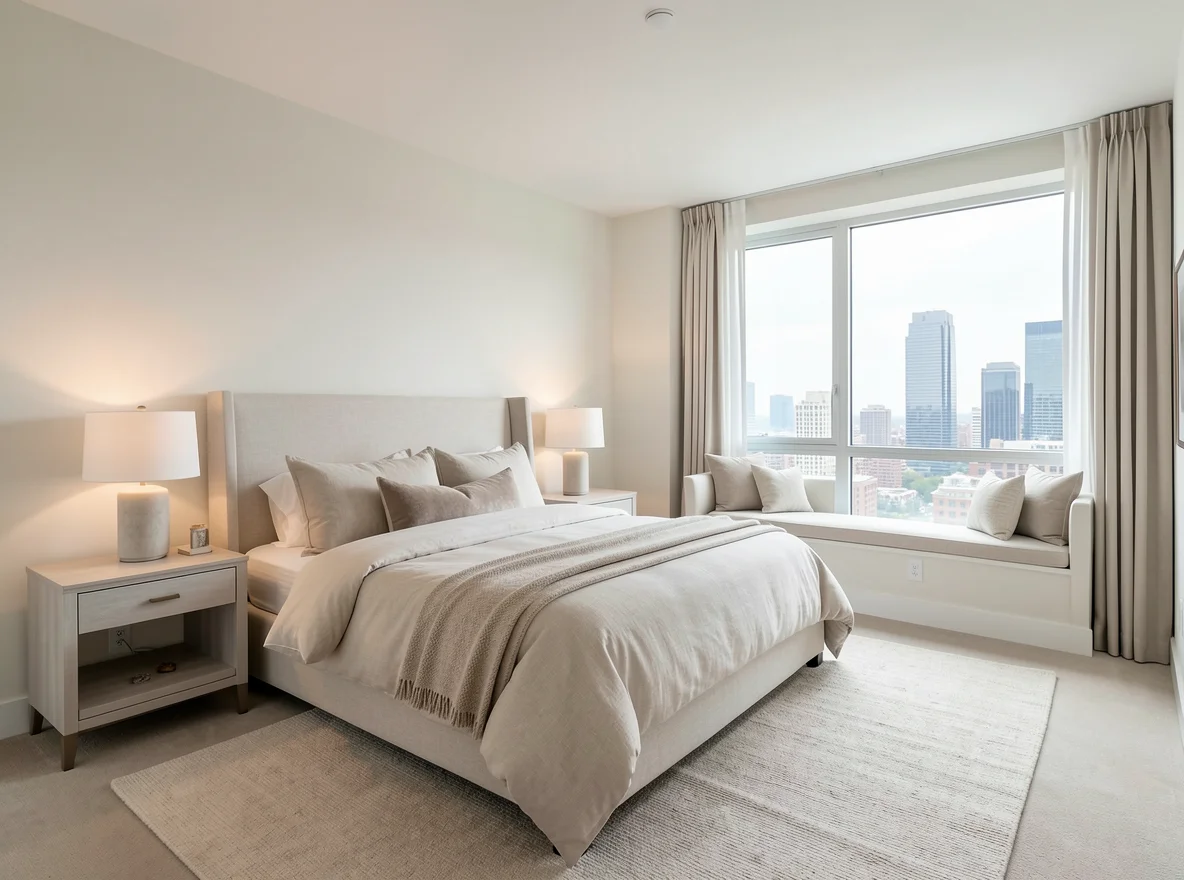
2. Define each area with a single clear purpose. Buyers are always asking themselves whether a home can support daily life comfortably. A compact apartment can answer that question well when each zone feels intentional. A small dining nook, a neatly scaled desk, or a simple reading corner can help buyers picture routines without making the home feel crowded.
The key is restraint. Trying to prove too many uses in one room usually backfires. A bedroom with office furniture, workout equipment, and extra storage may seem practical to the seller, but to a buyer it often reads as tight and overworked. One strong use per area is usually more effective than several competing ones.
3. Keep the palette light and visually consistent. Strong contrast can be beautiful, but in smaller homes it can also break up the space too sharply. Lighter wall colors, soft textiles, and a more consistent finish palette help the eye move smoothly from one area to the next. That visual continuity often makes an apartment feel larger than it would with abrupt color changes or heavy materials.
This does not mean every room needs to feel flat or generic. Texture still matters. Natural wood, matte finishes, layered lighting, and subtle fabrics can add warmth without making the apartment feel visually heavy. The goal is a calm backdrop that lets the layout and natural light stand out.
Light, Storage, and Finish Matter More Than Sellers Think
4. Maximize every source of light. Natural light is one of the most powerful tools for making an apartment feel open. Clean the windows thoroughly, remove heavy drapery, and make sure window treatments let in as much daylight as possible. Mirrors can also help when placed thoughtfully to reflect light deeper into the home.
If some rooms do not receive much direct light, artificial lighting becomes even more important. Matching warm bulbs, updated fixtures, and layered lamp lighting can soften darker corners and reduce the boxed-in feeling that turns buyers off. A bright apartment tends to feel more welcoming in person and more spacious in listing photos.
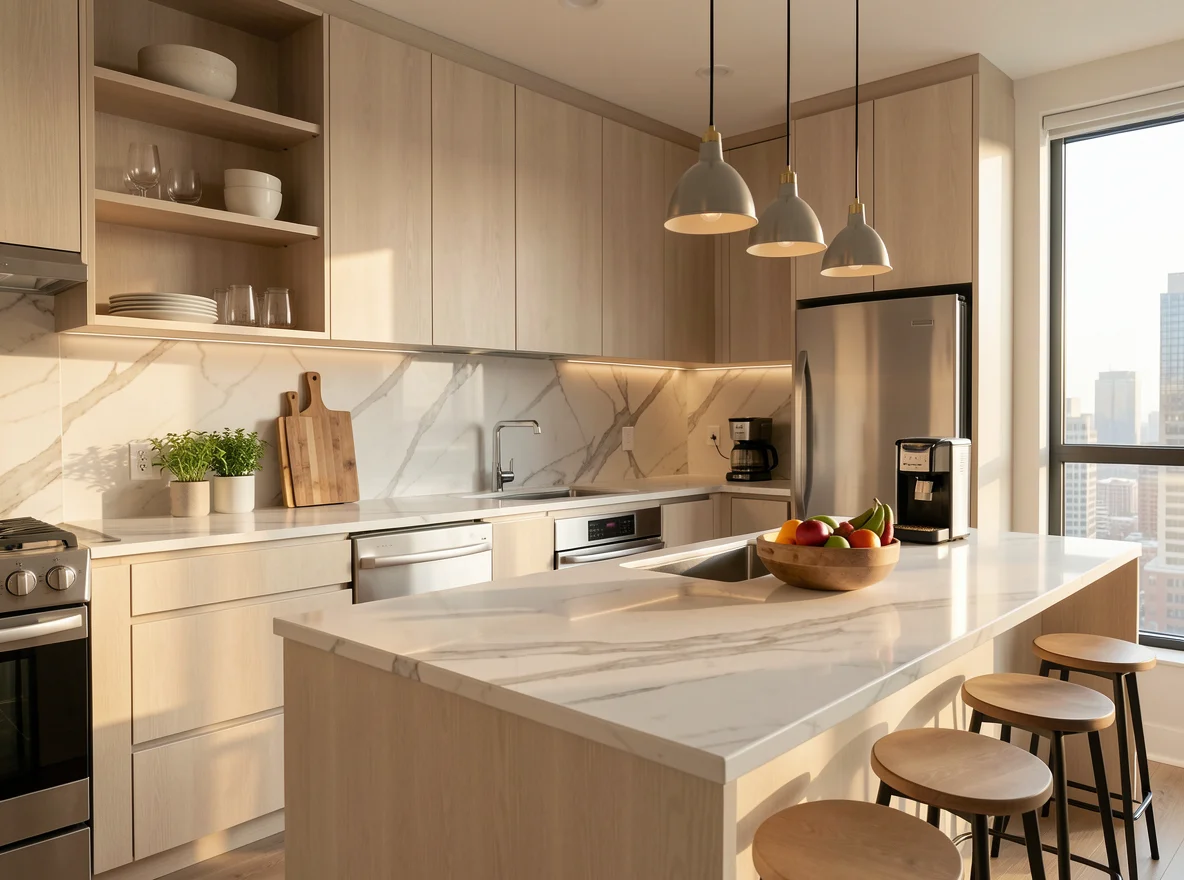
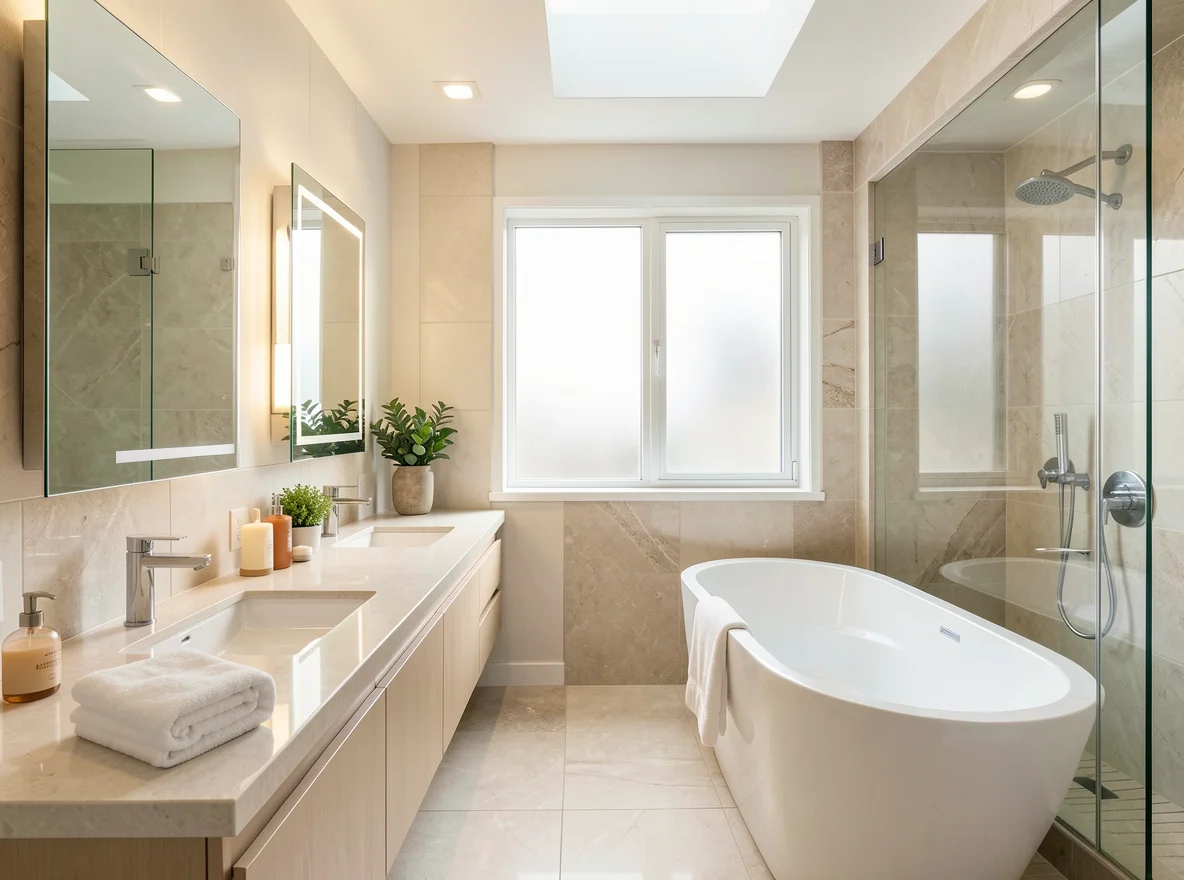
5. Simplify surfaces and sharpen the small details. Kitchens and bathrooms often shape a buyer's overall impression of efficiency. Crowded counters, worn caulk, chipped paint, and inconsistent hardware create friction. Clear surfaces, fresh touch-up work, and a few small repairs can make these spaces feel cleaner, larger, and better maintained.
The same principle applies throughout the home. Sticky doors, scuffed trim, awkward floor transitions, and visible deferred maintenance pull attention away from the apartment's strengths. In a smaller property, every detail carries more weight because there is less room for imperfections to disappear.
Ultimately, making an apartment feel bigger is about helping buyers experience ease. Clean sightlines, lighter finishes, better lighting, and purposeful staging all support that feeling. When a home feels calm, functional, and ready for the market, buyers are more likely to remember it, connect with it, and see its full value.